The Most In-Demand Gas Industry Skills in 2026
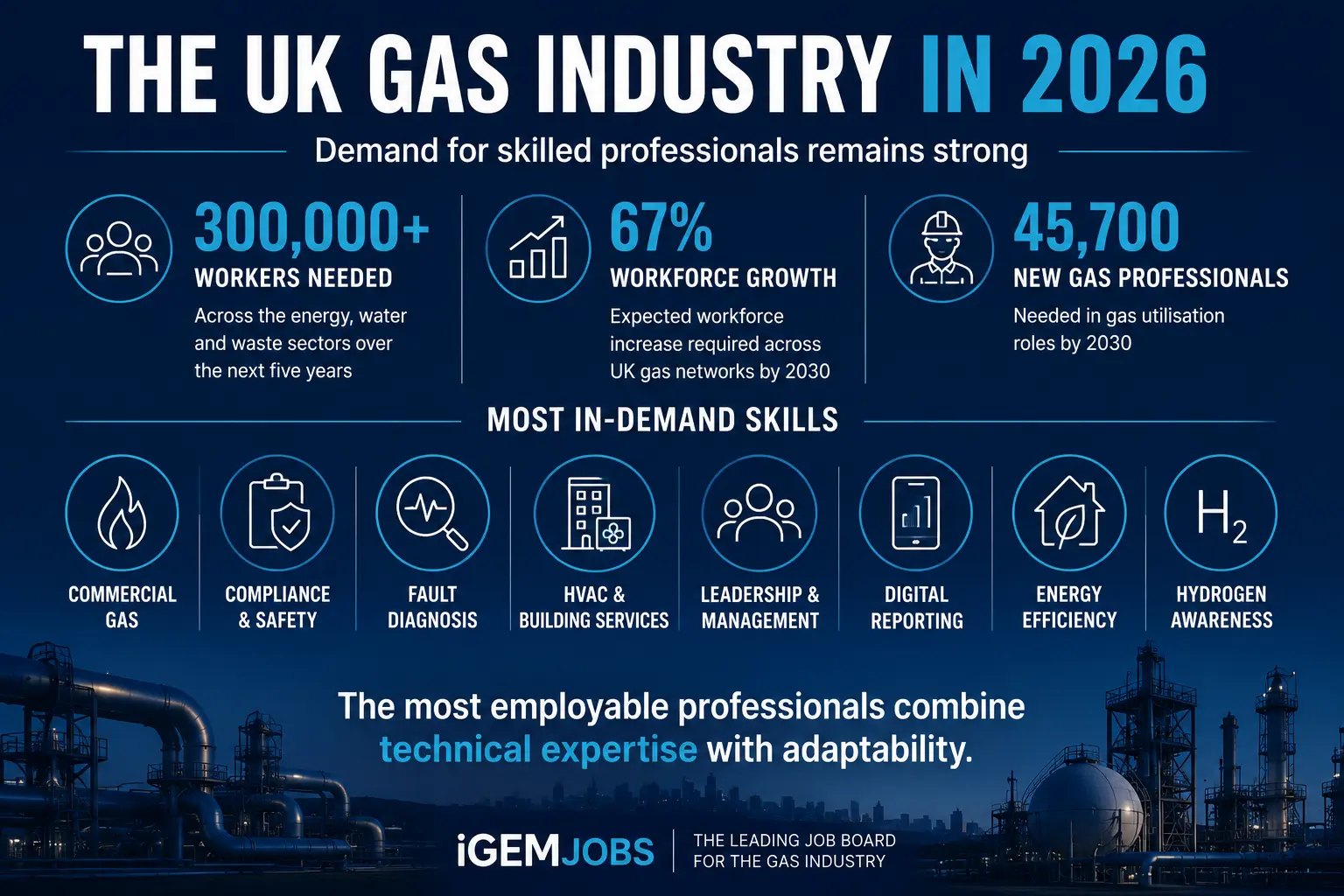
The Most In-Demand Gas Industry Skills in 2026
The UK gas industry is changing, but one thing remains the same: skilled people are still in demand.
Despite headlines about the energy transition and new technologies, employers across the gas, utilities and energy sectors continue to face recruitment challenges. Experienced engineers, supervisors, compliance professionals and managers remain difficult to find, and many organisations are competing for the same talent.
For job seekers, that's good news.
The question isn't whether gas careers still have a future. The question is which skills employers are actively looking for and how you can position yourself for the best opportunities.
Here are the ten skills that are shaping the gas industry job market in 2026.
1. Strong Gas Safe and ACS Competence
It may sound obvious, but the most valuable skill in the industry remains the ability to carry out gas work safely and competently.
Employers continue to prioritise candidates with current ACS qualifications, relevant appliance categories and a solid understanding of industry standards and best practice.
In a competitive market, keeping qualifications up to date is one of the simplest ways to improve employability.
2. Commercial Gas Experience
Commercial gas remains one of the strongest differentiators in the market.
Many employers are looking for engineers who can work on larger and more complex systems found in schools, hospitals, factories, hotels and public buildings.
Qualifications such as COCN1, CODNCO1, ICPN1 and CIGA1 continue to appear regularly in job advertisements and can significantly increase earning potential.
For engineers looking to move beyond domestic work, commercial experience can open the door to some of the industry's highest-paying technical roles.
3. Fault Finding and Problem Solving
Installation skills are important, but many employers place equal value on engineers who can diagnose problems quickly and efficiently.
Whether working in social housing, facilities management or commercial maintenance, organisations need people who can identify faults, explain issues clearly and get systems back up and running safely.
The best engineers are often those who can combine technical knowledge with practical problem-solving.
4. Compliance and Safety Management
Compliance is becoming a bigger part of many roles, particularly for senior engineers, supervisors and managers.
Employers increasingly need people who understand audit requirements, safety documentation, risk management and regulatory obligations.
As organisations become more compliance-driven, professionals who can demonstrate strong governance and attention to detail are becoming increasingly valuable.
5. Leadership and Team Management
Technical expertise alone is no longer enough for many senior positions.
Employers want managers who can lead teams, coordinate contractors, manage performance and deliver projects successfully.
If you're looking to move into supervisory or management positions, developing leadership skills can be just as important as gaining additional technical qualifications.
6. Digital Reporting and Documentation
The days of paper job sheets are rapidly disappearing.
Today's engineers are expected to use mobile apps, digital certificates, compliance systems and electronic reporting tools as part of their daily work.
While it may not sound exciting, strong digital skills can make a significant difference to both productivity and career progression.
Engineers who produce accurate records and managers who understand operational data are highly valued across the sector.
7. HVAC and Building Services Knowledge
Many employers are now looking for engineers who can work across multiple building systems.
Experience with HVAC equipment, controls, heating systems and wider building services can create additional career opportunities, particularly within facilities management and commercial maintenance environments.
The more versatile your skill set becomes, the wider your employment options.
8. Energy Efficiency and Retrofit Knowledge
Energy efficiency remains a major focus across the UK.
Whether working in housing, commercial property or public sector estates, engineers increasingly encounter smart controls, upgraded heating systems and energy-saving technologies.
Candidates who understand efficiency improvements and can advise customers confidently often stand out from the competition.
9. Hydrogen and Future Energy Awareness
Hydrogen may not yet be part of every engineer's day-to-day work, but awareness of future energy technologies is becoming increasingly valuable.
Many organisations are investing in research, pilot projects and infrastructure that support the UK's transition to lower-carbon energy systems.
You don't need to become a hydrogen specialist overnight, but understanding the direction of the industry can help you prepare for future opportunities.
10. Communication and Professionalism
One of the most underrated skills in the industry has nothing to do with tools or technology.
Gas engineers regularly work in people's homes, schools, hospitals and commercial premises. The ability to communicate clearly, build trust and represent an organisation professionally remains incredibly important.
Many employers say that technical skills can be taught, but professionalism, reliability and customer service often set the best candidates apart.
Which Skills Should You Focus On?
The answer depends on where you are in your career.
New entrants should focus on building strong technical foundations and gaining recognised qualifications.
Experienced domestic engineers may benefit from commercial gas qualifications, fault-finding expertise and energy-efficiency knowledge.
Commercial engineers could strengthen their prospects through HVAC experience, compliance knowledge and leadership development.
Those aiming for management positions should focus on contractor management, operational performance, compliance reporting and people leadership.
The most successful professionals are rarely those who chase every new qualification. Instead, they build on a strong technical foundation and add skills that support their long-term career goals.
The Future Looks Positive
The gas industry is evolving, but the demand for skilled professionals remains strong.
Employers continue to need engineers, supervisors and managers who can combine technical competence with adaptability, professionalism and a willingness to learn.
The technologies may change, but the need for skilled people isn't going away.
If you're looking to develop your career in the gas and energy sector, now is an excellent time to invest in your skills and explore the opportunities available across the industry.
Ready for your next move? Browse the latest gas engineering, compliance and management vacancies on IGEM Jobs and discover where your skills could take you next.